

Chandipura virus (CHPV) is an enveloped, single-stranded negative-sense RNA virus belonging to the genus Vesiculovirus within the family Rhabdoviridae. The virus was first isolated in 1965 from the blood of a febrile patient in Chandipura village, Maharashtra, India. CHPV is primarily transmitted through arthropod vectors such as sandflies, and its natural hosts include various mammals and birds. The virus exhibits seasonal prevalence in certain parts of the Indian subcontinent and can cause acute encephalitis, particularly in children. Ongoing research on the ecological distribution, transmission patterns, and molecular characteristics of CHPV is essential for assessing its public health risks.
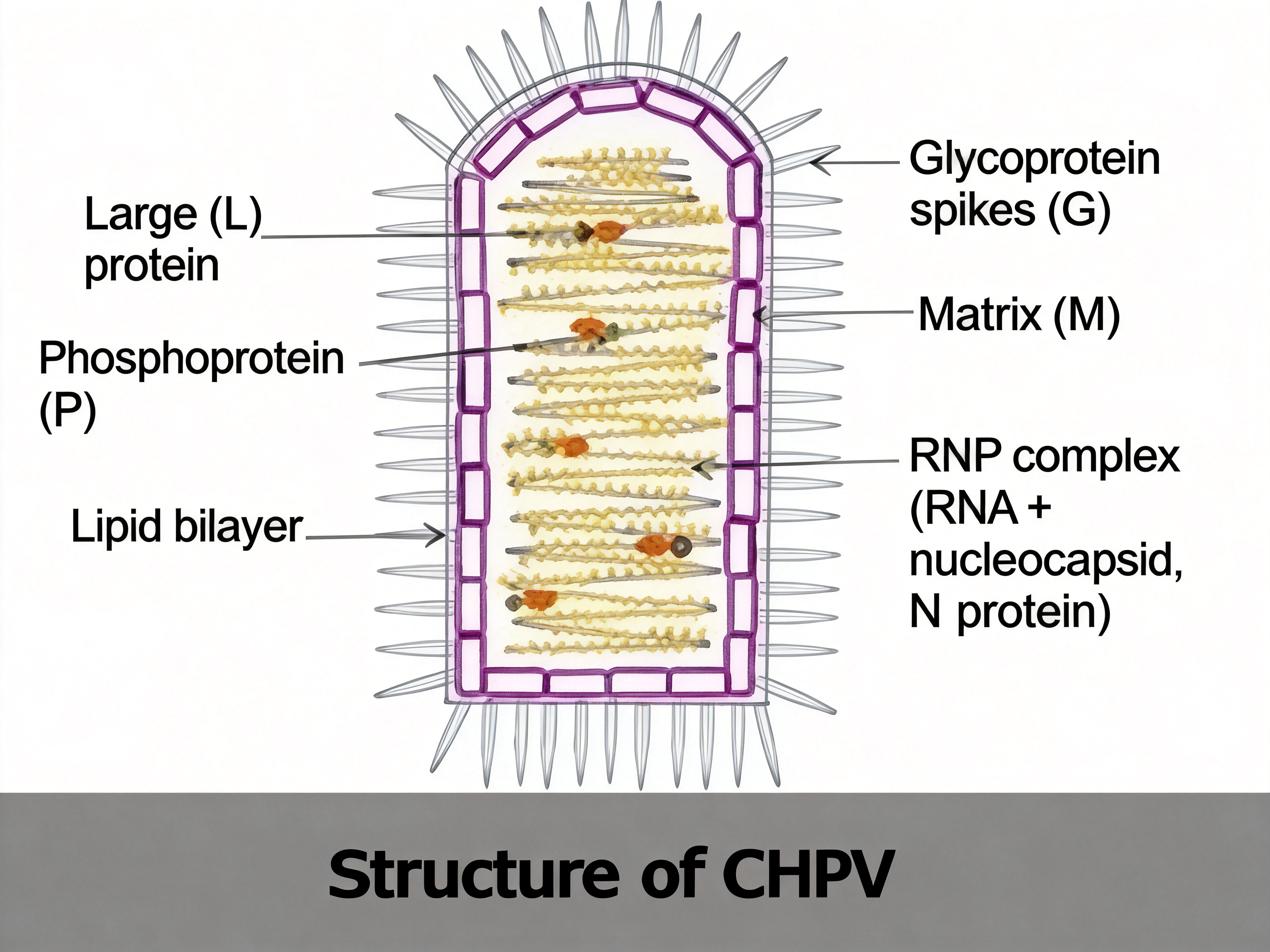
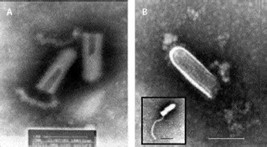
Chandipura virus belongs to the family Rhabdoviridae, and its viral particles exhibit a characteristic bullet-shaped morphology, approximately 150–180 nm in length and 50–70 nm in diameter, featuring a lipid envelope and a helically symmetric nucleocapsid structure. The viral genome is a non-segmented single-stranded negative-sense RNA, about 11.1 kb in size, encoding five viral proteins. The entire viral particle is structured from the inside out, primarily comprising the ribonucleoprotein complex (RNP), the matrix layer, and the viral envelope. The RNP is formed by the genomic RNA bound to the nucleoprotein (N protein), phosphoprotein (P protein), and large protein (L protein), constituting the core complex for viral transcription and replication. The matrix layer consists of the matrix protein (M protein), which plays a key role in maintaining viral morphology, mediating interactions between the nucleocapsid and the envelope, and facilitating viral budding. The viral envelope is derived from the host cell membrane and is embedded with spike structures formed by glycoprotein (G protein) trimers. The G protein is responsible for recognizing host cell surface receptors and mediating the fusion of the virus with the cell membrane, making it a key molecule determining viral cell tropism and host range. At the same time, the G protein is also the primary antigen that induces the production of neutralizing antibodies in the host, and its antigenic properties provide an important molecular foundation for the development of serological diagnostic methods and vaccine research.
Our company provides a comprehensive range of antigens and antibodies for the Chandipura virus.
【Antigens】
| Product Name | Catalog# | Contact |
| NebuSelect™ Recombinant CHPV G/Glycoprotein Protein, 22-440aa, Fc-tag | NBL-291809 | ☎ Technical Support >> |
| NebuSelect™ Recombinant CHPV G/Glycoprotein Protein, 22-440aa, His-tag | NBL-291810 | ☎ Technical Support >> |
| NebuSelect™ Recombinant CHPV G/Glycoprotein Protein, 22-440aa, His-tag | NBL-291811 | ☎ Technical Support >> |
| NebuSelect™ Recombinant CHPV M/Matrix protein Protein, 47-229aa, His-tag | NBL-291812 | ☎ Technical Support >> |
| NebuSelect™ Recombinant CHPV N/Nucleoprotein Protein, 1-422aa, His-tag | NBL-291813 | ☎ Technical Support >> |
| NebuSelect™ Recombinant CHPV P/Phosphoprotein Protein, 104-293aa, His-tag | NBL-291814 | ☎ Technical Support >> |
【Antibodies】
| Product Name | Catalog# | Contact |
| NebuSelect™ Anti-CHPV G/Glycoprotein Polyclonal Antibody | NBAB-194542 | ☎ Technical Support >> |
| NebuSelect™ Anti-CHPV P/Phosphoprotein Polyclonal Antibody | NBAB-194543 | ☎ Technical Support >> |
| NebuSelect™ Anti-CHPV M/Matrix protein Polyclonal Antibody | NBAB-194544 | ☎ Technical Support >> |
| NebuSelect™ Anti-CHPV N/Nucleoprotein Polyclonal Antibody | NBAB-194545 | ☎ Technical Support >> |


