

Mojiang virus (MojV) is an enveloped, single-stranded negative-sense RNA virus belonging to the family Phenuiviridae within the order Bunyavirales. The virus was initially isolated and identified from insect vectors in the Mojang region of Yunnan Province, China. The natural host and transmission cycle of MojV are still under intensive investigation, with existing research suggesting that it may be maintained in specific ecological environments through arthropod vectors. As a newly discovered virus, its potential biological characteristics and ecological distribution continue to attract attention. Systematic virological and epidemiological studies are of significant value for assessing its public health implications.

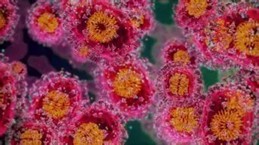
Mojang virus belongs to the family Phenuiviridae, and its viral particles are typically spherical or pleomorphic, with a diameter of approximately 80–120 nm and distinct spikes formed by glycoproteins on the surface. The viral genome consists of three segments of single-stranded negative-sense RNA, including the large (L), medium (M), and small (S) segments, which encode the RNA-dependent RNA polymerase, envelope glycoproteins Gn and Gc, and nucleoprotein N, respectively. The entire viral particle is structured from the inside out, primarily comprising the ribonucleoprotein complex (RNP), the matrix layer, and the viral envelope. The RNP is formed by the binding of each RNA segment to the N protein and L protein, constituting functional units for viral transcription and replication. The matrix layer plays a crucial role in viral assembly, morphology maintenance, and budding. The viral envelope is derived from the host cell membrane and is embedded with spikes composed of Gn and Gc glycoprotein heterodimers. These spikes are responsible for recognizing host cell surface receptors, mediating viral fusion with the cell membrane, and facilitating endocytic entry, making them key molecules for viral infection. Simultaneously, the Gn and Gc proteins are also the primary antigens that induce specific antibody responses in the host, providing an important molecular foundation for the establishment of serological detection methods, viral typing studies, and the development of related research tools.
Our company provides a comprehensive range of antigens and antibodies for the Mojang virus.
【Antigens】
| Product Name | Catalog# | Contact |
| NebuSelect™ Recombinant Mojiang virus/MojV F/Fusion glycoprotein F0 Protein, 130-489aa, His-tag | NBL-292251 | ☎ Technical Support >> |
| NebuSelect™ Recombinant Mojiang virus/MojV F/Fusion glycoprotein F0 Protein, 25-111aa, His-tag, SUMO-tag, Strep-tag | NBL-292252 | ☎ Technical Support >> |
| NebuSelect™ Recombinant Mojiang virus/MojV G/Glycoprotein Protein, 67-625aa, Strep-tag | NBL-292253 | ☎ Technical Support >> |
| NebuSelect™ Recombinant Mojiang virus/MojV G/Glycoprotein Protein, 207-625aa, His-tag | NBL-292254 | ☎ Technical Support >> |
| NebuSelect™ Recombinant Mojiang virus/MojV G/Glycoprotein Protein, 67-625aa, Strep-tag, Strep-tag | NBL-292255 | ☎ Technical Support >> |
【Antibodies】
| Product Name | Catalog# | Contact |
| NebuSelect™ Anti-Mojiang virus/MojV F/Fusion Protein Antibody | NBAB-194866 | ☎ Technical Support >> |
| NebuSelect™ Anti-Mojiang virus/MojV F/Fusion glycoprotein F0 Polyclonal Antibody | NBAB-194868 | ☎ Technical Support >> |


