

Rotavirus A (RV-A) is a non-enveloped double-stranded RNA virus belonging to the genus Rotavirus within the family Reoviridae. It is one of the major pathogens causing severe viral gastroenteritis in infants, young children, and young animals, and is widely distributed globally. RV-A exhibits high genetic diversity, with its genome consisting of 11 segmented double-stranded RNA molecules, which facilitates the generation of new viral strains through genetic reassortment. Given its significant public health impact, the World Health Organization (WHO) has identified it as a key pathogen for vaccine-preventable diseases. Continuous epidemiological surveillance and research on viral characteristics are crucial for disease control and prevention.

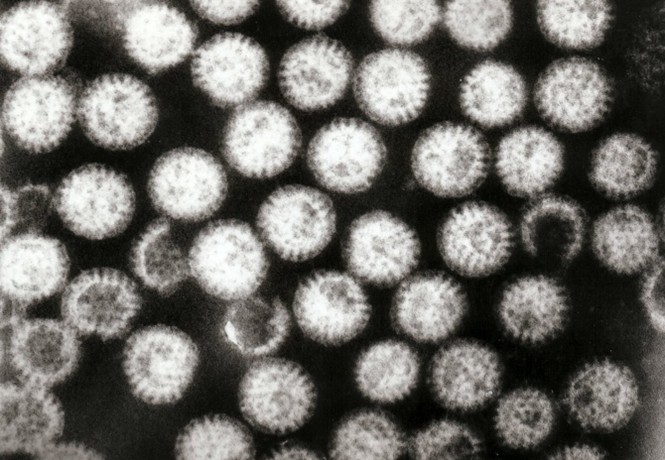
The Rotavirus A particle exhibits a characteristic wheel-like structure (from which rotaviruses derive their name), with a diameter of approximately 70–75 nm and a triple-layered icosahedral protein capsid. The viral genome consists of 11 segments of double-stranded RNA, with a total size of about 18.5 kb, encoding six structural proteins and six non-structural proteins. The entire viral particle is structured from the inside out, primarily comprising the core layer, the inner capsid, and the outer capsid. The core layer contains the genomic RNA bound to VP1, VP2, and VP3 proteins, forming the viral transcription and replication complex. The inner capsid is composed of VP6 protein, which serves as the major group-specific antigen of rotaviruses and plays a key role in maintaining viral structural stability. The outer capsid consists of two main proteins, VP7 and VP4. VP7 forms a smooth protein layer, while VP4 projects as spikes on the viral surface. Proteolytic cleavage of VP4 generates VP5 and VP8 fragments, with the VP8 domain responsible for recognizing host cell surface receptors such as sialic acids or histo-blood group antigens, making it critical for mediating viral attachment and cellular entry. Together, VP7 and VP4 determine the serotype of the virus (G and P types) and serve as the primary antigenic targets for inducing protective immune responses in the host, as well as central focuses for vaccine design and diagnostic development.
Our company provides a comprehensive range of antigens and antibodies for Rotavirus A.
【Antigens】
| Product Name | Catalog# | Contact |
| NebuSelect™ Recombinant Human rotavirus A Outer capsid protein VP4 Protein, 248-480aa, His-tag | NBL-292062 | ☎ Technical Support >> |
| NebuSelect™ Recombinant Human rotavirus A VP4/Outer capsid protein VP4 Protein, 15-173aa, His-tag | NBL-292063 | ☎ Technical Support >> |
【Antibodies】
| Product Name | Catalog# | Contact |
| NebuSelect™ Anti-Rotavirus A VP4/Outer capsid protein VP4 Antibody | NBAB-195079 | ☎ Technical Support >> |
| NebuSelect™ Anti-Rotavirus A/RV-A Outer capsid glycoprotein VP7 | NBAB-195080 | ☎ Technical Support >> |
| NebuSelect™ Anti-Rotavirus A/RV-A Intermediate capsid protein VP6 | NBAB-195081 | ☎ Technical Support >> |
| NebuSelect™ Anti-Rotavirus A/RV-A Outer capsid protein VP4 | NBAB-195082 | ☎ Technical Support >> |
| NebuSelect™ Anti-Rotavirus A Outer capsid protein VP4 Polyclonal Antibody | NBAB-195083 | ☎ Technical Support >> |


