

Junin virus (JUNV) belongs to the Arenaviridae family and the Mammarenavirus genus. It is a single-stranded, negative-sense, segmented RNA virus. The virus was first discovered in 1958 in the Junín region of Argentina and is the primary pathogen responsible for Argentine hemorrhagic fever. The natural hosts of the virus are primarily specific rodent species, such as South American field mice. Transmission occurs through aerosols or contaminated materials formed from the excretions(e.g.,urine,saliva)of infected animals, establishing a typical"rodent-environment-human" transmission cycle. As an important member of the New World arenavirus group, Junin virus exhibits both conserved and specific differences in its genomic structure and antigenic characteristics compared to other viruses in the same genus, such as Lassa virus and Machupo virus.
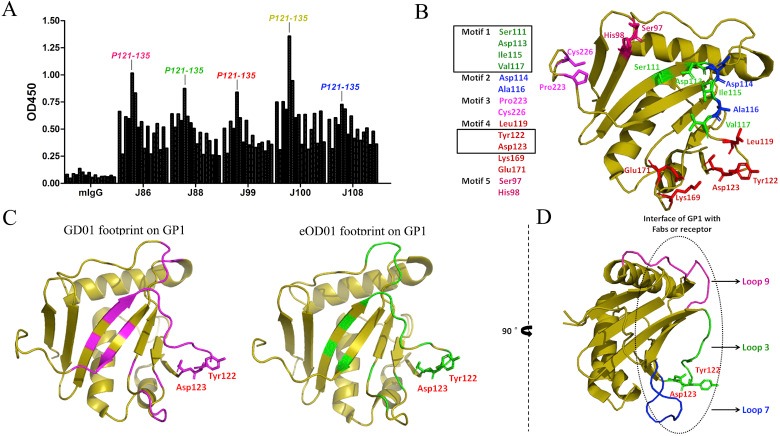
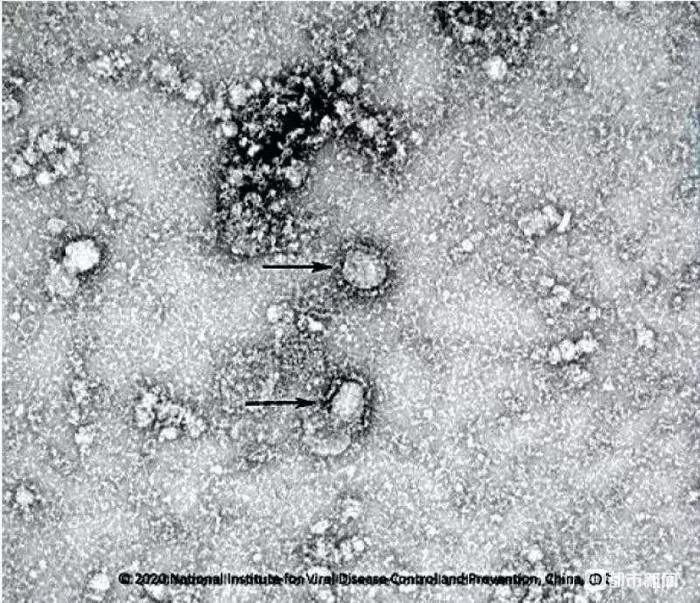
Junin virus particles are pleomorphic, predominantly spherical, with diameters ranging from approximately 50 to 300 nm, displaying typical arenavirus structural features. The outermost layer of the virion is a lipid bilayer envelope derived from the host cell membrane, uniformly studded with trimeric spike structures formed by the glycoproteins GP1 and GP2. Beneath the envelope is a matrix protein layer. The viral core contains two segments of single-stranded, negative-sense RNA genome (the large L segment and the small S segment) along with multiple host cell ribosomes. The S segment employs an ambisense coding strategy, encoding the nucleoprotein (NP) and the glycoprotein precursor (GPC). GPC is cleaved by proteases to form the mature GP1 and GP2 glycoproteins. The L segment encodes the viral RNA-dependent RNA polymerase (L protein). The GP1 glycoprotein on the virion surface contains critical receptor-binding domains and antigenic epitopes, serving as a key target for mediating viral entry and neutralizing antibodies. Junin virus completes its replication and assembly within the host cell cytoplasm and acquires its envelope via budding from the cell membrane. Electron-dense ribosome particles are often visible inside the virions, contributing to the characteristic "sandy" granular appearance.
Our company provides a full range of Junin virus antigens and antibodies.
【Antigens】
| Product Name | Catalog# | Contact |
| NebuSelect™ Recombinant JUNV Glycoprotein GP1, 59-232aa, Fc-tag | NBL-292171 | ☎ Technical Support >> |
| NebuSelect™ Recombinant JUNV Glycoprotein GP1, 59-250aa, His-tag | NBL-292172 | ☎ Technical Support >> |
| NebuSelect™ Recombinant JUNV GP1 Protein, 59-250aa, Fc-tag | NBL-292173 | ☎ Technical Support >> |
| NebuSelect™ Recombinant JUNV GP2 Protein, 252-424aa, Fc-tag | NBL-292174 | ☎ Technical Support >> |
| NebuSelect™ Recombinant JUNV GP2 Protein, 252-424aa, His-tag | NBL-292175 | ☎ Technical Support >> |
| NebuSelect™ Recombinant JUNV Nucleoprotein, 1-564aa, His-tag | NBL-292176 | ☎ Technical Support >> |
| NebuSelect™ Recombinant JUNV Protein Z, 2-94aa, His-tag | NBL-292177 | ☎ Technical Support >> |
【Antibodies】
| Product Name | Catalog# | Contact |
| NebuSelect™ Anti-JUNV Glycoprotein GP1 Antibody | NBAB-194870 | ☎ Technical Support >> |
| NebuSelect™ Anti-JUNV Glycoprotein GPC Antibody | NBAB-195092 | ☎ Technical Support >> |
| NebuSelect™ Anti-JUNV GP1 glycoprotein Antibody | NBAB-195093 | ☎ Technical Support >> |
| NebuSelect™ Anti-JUNV Nucleoprotein Nanobody | NBAB-195094 | ☎ Technical Support >> |
| NebuSelect™ Anti-JUNV Glycoprotein GP1 Antibody | NBAB-195095 | ☎ Technical Support >> |
| NebuSelect™ Anti-JUNV Glycoprotein GP2 Antibody | NBAB-195096 | ☎ Technical Support >> |


